
Why Handmade Still Matters
In an era of mass production and automated assembly lines, the phrase “handmade” can feel like a nostalgic throwback. But for premium eyewear brands, handmade craftsmanship isn't a relic—it's a differentiator.
Machines excel at consistency and speed. They can produce thousands of identical components with precision. But they cannot feel the material, adjust pressure based on subtle variations in leather thickness, or sense when a fold is “just right.”
That's where handmade craftsmanship comes in.
This isn't about choosing one over the other. The best eyewear cases combine the precision of machines with the discernment of human hands. The machine cuts; the craftsman evaluates. The machine presses; the craftsman adjusts.
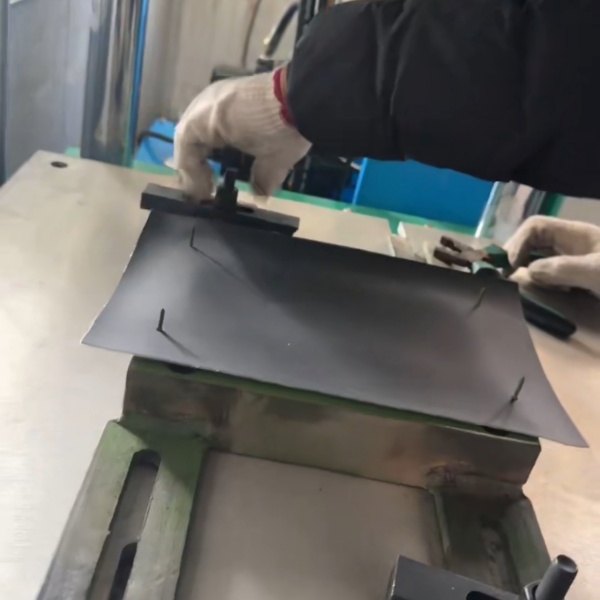
At our factory, this balance is personified by one man: Master Chen.
Meet Master Chen: 25 Years of Experience in His Hands
Chen joined the eyewear package industry in 1998. For 25 years, he has worked with leather, paper, fabric, and metal—shaping them into cases that protect and present premium eyewear.
His phone gallery isn't filled with family photos. It's filled with folds, corners, stitches, and client drawings.
Every new product's first sample passes through his hands:
1, He feels the leather – Is it soft enough? Too stiff? Will it fold cleanly?
2,He checks the thickness – Will this material hold its shape? Will it cause issues in production?
3, He adjusts the temperature – Is the heat press set correctly for this material? Will the logo stamp be crisp?
4, He tests surface durability – Some coated materials wear easily; his fingers detect subtle differences.
Then he asks the questions that machines cannot answer:
Can this design be mass-produced?
Should we adjust the mold by 0.3mm?
What temperature will give the best result?
The answers aren't on the blueprint. They're in his hands.
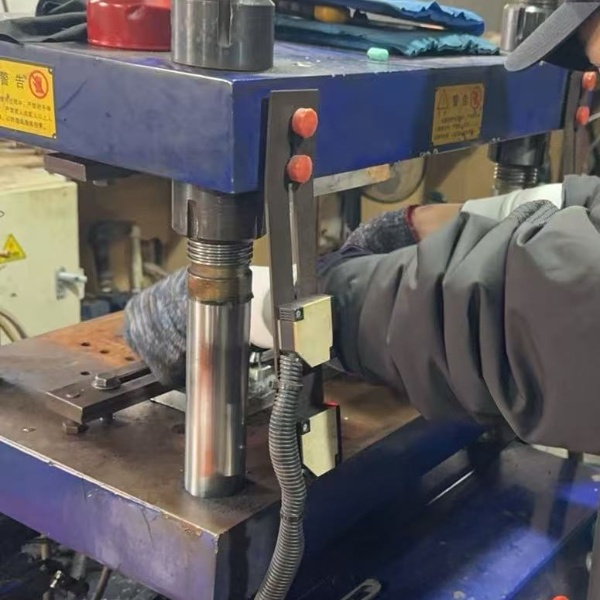
What Handmade Craftsmanship Brings to Your Eyewear Cases
1. Material Intuition
Leather, PU, and specialty papers all behave differently. They respond to heat, pressure, and folding in ways that vary by batch, humidity, and thickness.
A machine follows programmed instructions. A craftsman adapts in real-time. Chen can tell by touch whether a material needs more heat, less pressure, or a different folding angle.
This intuition prevents waste, reduces defects, and ensures that each piece—even within the same batch—receives the attention it needs.
2. Problem-Solving for Complex Designs
Some designs look beautiful on screen but present challenges in production. Sharp corners, tight curves, or unusual material combinations can trip up automated processes.
Chen's 25 years of experience mean he's seen these challenges before. When a client brings us a complex design, he doesn't just say “we'll try.” He says: “Here's how we'll make it work.”
He might suggest a slight angle adjustment, a different folding sequence, or a custom jig to hold the material in place. These insights come from experience, not algorithms.
3. The “Perfect” Finish
What kind of design can make a pair of eyewear packaging appear of superior quality?Often, it's details you can't measure with calipers:
The smoothness of an edge after hand-polishing
The precise tension of a magnetic closure
The alignment of stitching that feels “just right”
These are sensed, not measured. Chen's hands know when an edge is smooth enough, when a fold is perfectly seated, when a case is ready.
4. Training the Next Generation
Handmade craftsmanship doesn't exist in a vacuum. Chen's experience is passed down to younger workers who learn by watching, by doing, and by being corrected.
This ensures that even as we grow, the knowledge of how to make truly excellent cases isn't lost. It's preserved in the hands of people who learned from someone who learned from someone before them.
A Real Example: The W112 Handmade Case
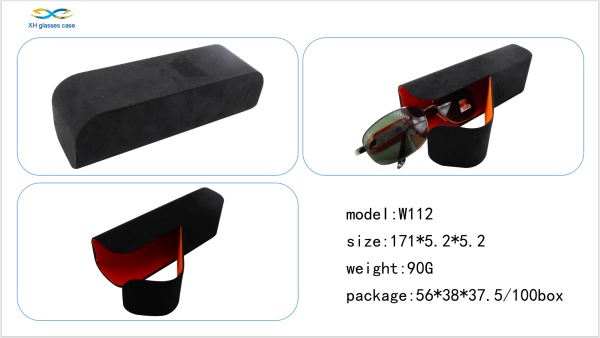
Just last week, we received an inquiry from a client in Morocco. They were looking for a handmade eyewear case, model W112, in quantities of 2,000 units.
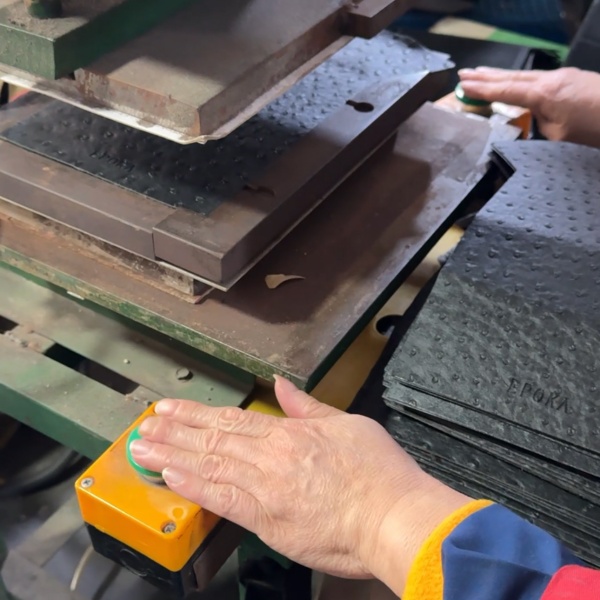
Why handmade? Because the design included细节 that machines struggle with: a tight corner, a specific fold, and a particular hand-feel requirement.
Chen reviewed the drawings and immediately saw the challenges—and the solutions. Within days, he had a plan for how to produce 2,000 units that would meet the client's expectations.
This is the value of experience: not just solving problems, but seeing them before they arise.
Handmade + Machine: The Best of Both Worlds
At our factory, we don't romanticize handmade at the expense of efficiency. We use machines for what they do best: precision cutting, consistent stitching, reliable assembly.
And we use craftsmen for what they do best: evaluating, adjusting, perfecting.
The result is eyewear cases that combine:
1,The precision of laser cutting
2,The consistency of automated stitching
3,The discernment of human hands
4,25 years of experience in every detail
Is Handmade Right for Your Brand?
Handmade craftsmanship isn't necessary for every product. For high-volume, standard designs, automated production is often the right choice.
But for:
- Limited editions
- Complex designs
- Premium positioning
- Materials that require careful handling
…handmade craftsmanship can be the difference between “good” and “exceptional.”
If you're developing a product that deserves that extra level of attention, let's talk. We can review your design and recommend the right balance of machine precision and human craftsmanship.
Packaging solutions:https://www.xhglassescase.com/solutionscomplete-eyewear-packaging-sets/
Ultimate Guide:https://www.xhglassescase.com/the-definitive-guide-to-custom-eyewear-packaging-case-manufacturing-2026/
An Italian Eyewear Brand’s Trust Journey:https://www.xhglassescase.com/case-studiesitalian-eyewear-brand-trust-journey-2/