
Does Your Eyeglass Case Lid Develop Creases After Being Folded? We’ll Solve This Problem Completely in 4 Steps
Have you ever encountered this problem?
After using a finely crafted eyeglass case for a while, fine creases begin to appear where the lid opens and closes repeatedly, and the leather may even bubble or delaminate. This not only affects the appearance but also significantly undermines the brand’s high-end image.
Why Do Creases Form?
The root cause lies in the relative displacement between the surface material (PU leather, fabric) and the intermediate support layer during repeated bending. Combined with the material’s insufficient elasticity, this prevents the surface from returning to a flat state.
As a glasses case manufacturer with 16 years of experience, we have completely resolved the issue of lid creasing through the following 4 core processes. Below, a set of real-life comparison photos visually demonstrates the results:
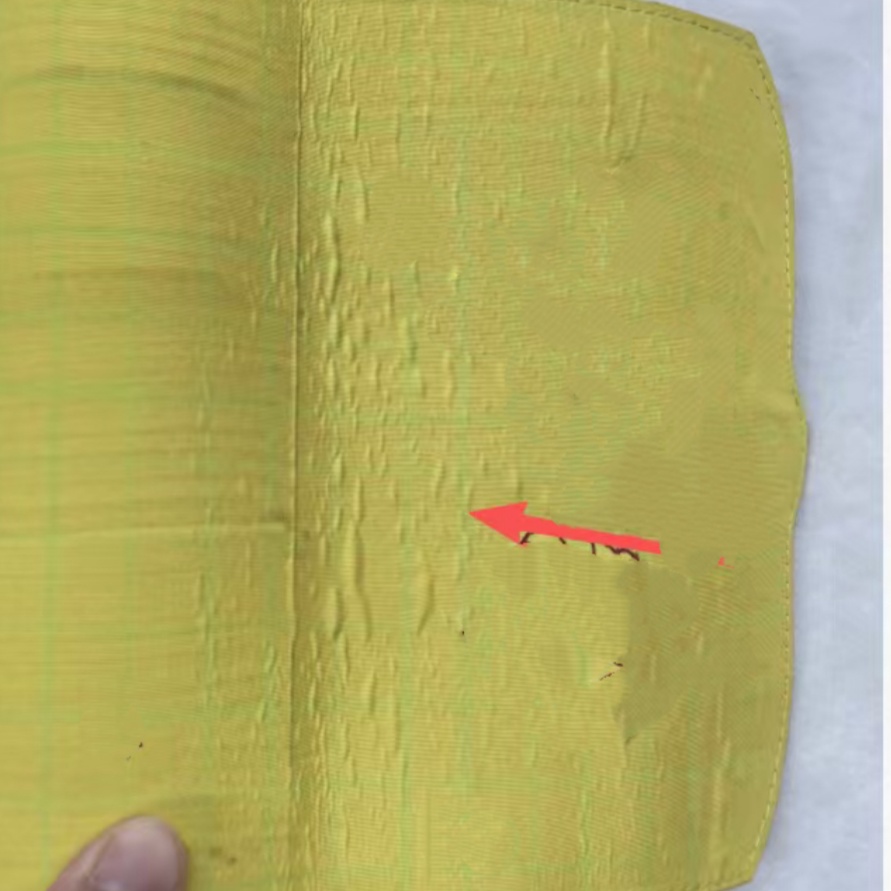
Standard-process eyewear case – Visible creases appear on the surface after bending
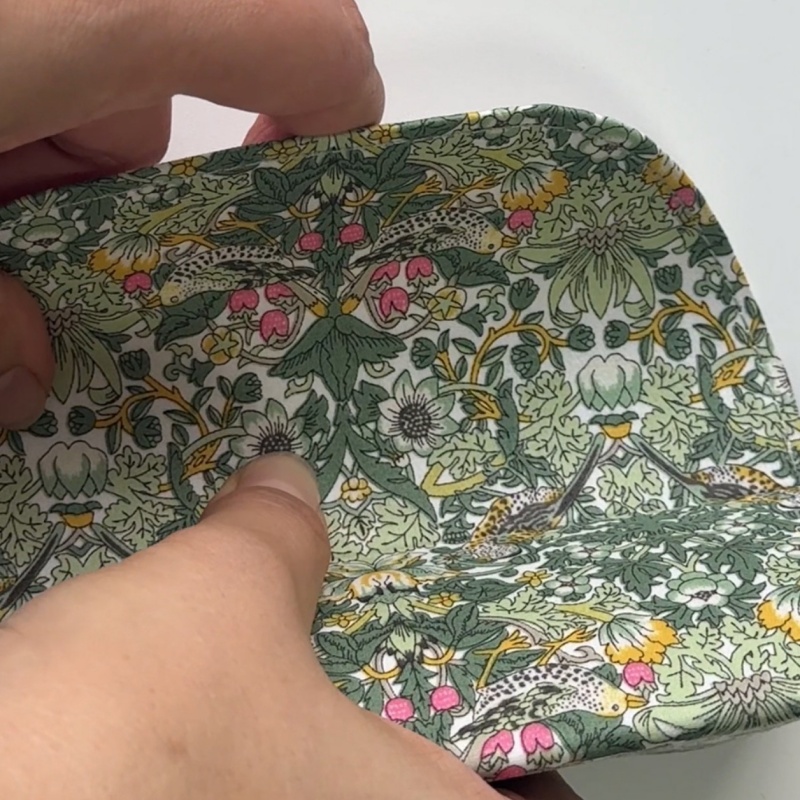
Our process – The surface remains smooth and crease-free even when bent in the opposite direction
Step 1: Material Pre-treatment – Thickening & Eco-Friendly Adhesive Selection
Different materials require different treatment methods. We do not apply a “one-size-fits-all” approach to all materials.
Soft or thin leather: First, we perform a thickening process to increase the material’s stiffness. During thickening, we strictly select specialized eco-friendly adhesives based on the material type. For example, PU leather is paired with a leather-specific adhesive to ensure strong bonding without damaging the surface.
Fabric Materials: Since fabric easily absorbs moisture from the adhesive, leading to hardening or delamination, we use fabric-specific adhesives. Depending on the situation, we apply a second coat of adhesive to ensure a strong bond while maintaining a soft feel.
Result: The pre-treated surface material exhibits significantly improved tensile strength, laying the foundation for subsequent shaping.
Step 2: Bonding the Core Layer – Double-Sided Adhesive Application for a Solid, Integrated Structure
The core layer of the eyewear case (made of cardboard, kraft paper, specialty paper, etc.) serves as the pressure-resistant framework. If the bond between the core layer and the outer layer is weak, the layers will shift and wrinkle when the case is bent.
We select eco-friendly adhesives specifically designed for paper based on the paper’s properties.
Key Process: Apply adhesive to the core layer + apply adhesive to the back of the outer layer. During hot pressing, the two layers of adhesive interpenetrate, creating a “chemical welding” effect. The bond strength far exceeds that of single-sided application. Even after repeated bending, the two layers will not separate.
Result: The outer layer and core layer are fully bonded, fundamentally eliminating relative movement.
Step 3: Heat Pressing – “Memorizing” the Shape
This is the most easily overlooked yet most critical step. To cut costs, many factories skip the heat pressing process, relying solely on manual folding or cold pressing, which results in the material failing to return to its original shape after bending.
Our Process:
Place the adhesive-coated semi-finished product into a specialized hot-press mold.
Maintain precise temperature (80–120°C) and pressure for a set duration (10–30 seconds).
Hot pressing allows the adhesive to fully cure while permanently shaping the surface and intermediate layers to match the mold’s curvature.
Result: Even when bent in the opposite direction or subjected to long-term use, heat-pressed lids quickly return to a flat state thanks to the material’s “shape memory,” remaining wrinkle-free and distortion-free.
Step 4: Upgrading the Core Layer Material – PVC Sheets: The Cost-Effective Choice
Traditional core layers typically use cardboard or kraft paper, which, while eco-friendly, have limited resistance to repeated bending. We offer our customers a superior alternative: PVC sheets.
Advantages: PVC sheets offer excellent flexibility and resilience. At the same thickness, their resistance to bending is 3–5 times that of cardboard.
Value for Money: Priced similarly to high-grade cardboard, but with a significantly longer service life. Long-term use will not cause the material to soften due to moisture absorption or result in delamination and wrinkling.
Ideal Applications: Particularly suitable for eyewear cases requiring frequent opening and closing and long-term use (such as daily commuter models).
Results: With a PVC core layer and heat-pressed shaping, the lid can withstand tens of thousands of bends while remaining as smooth and flat as new.
Summary: Our Commitment
Through a four-step process—thicker material + double-sided adhesive coating + heat-pressed shaping + premium PVC core layer—the eyeglass case lids we produce:
Resist wrinkling even after repeated opening and closing
Resist deformation even when bent in the opposite direction
Prevent surface leather from peeling or bubbling
Offer a lifespan far exceeding standard manufacturing processes
If you’re frustrated by creasing issues with your current eyewear case lids, or if you’d like to create higher-quality packaging for your brand, please contact us to request samples or discuss technical details.
Inquire now to receive free material samples and test reports。
YouTube videos:https://www.youtube.com/shorts/oqot12p3FCc