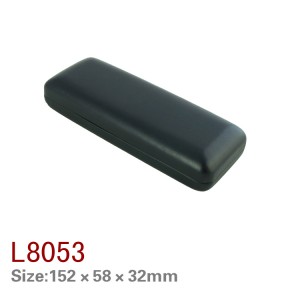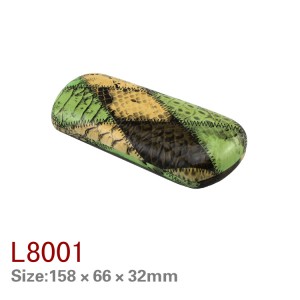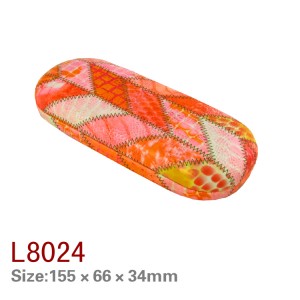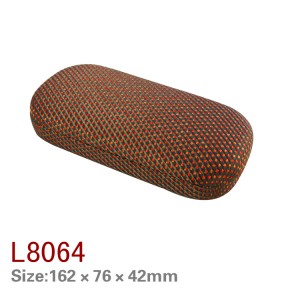
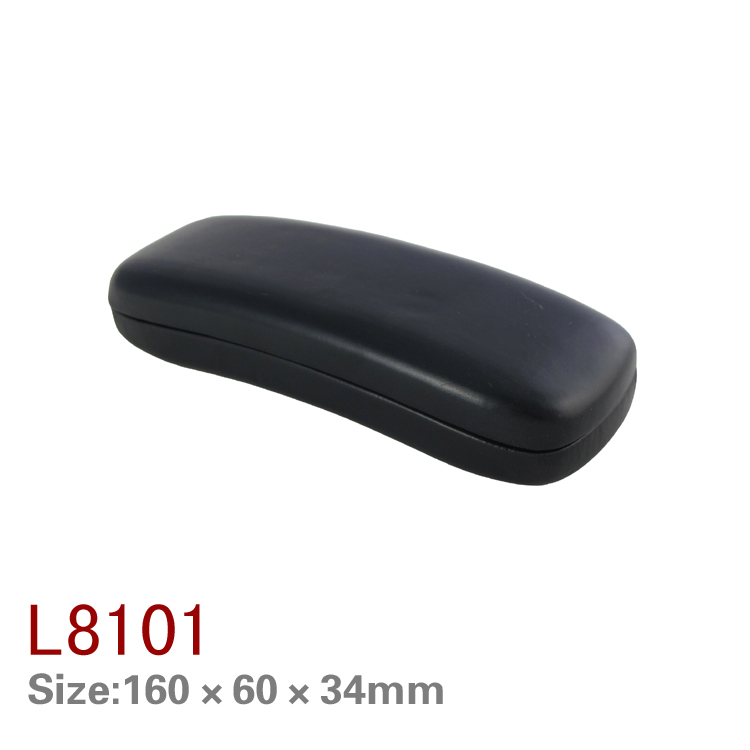
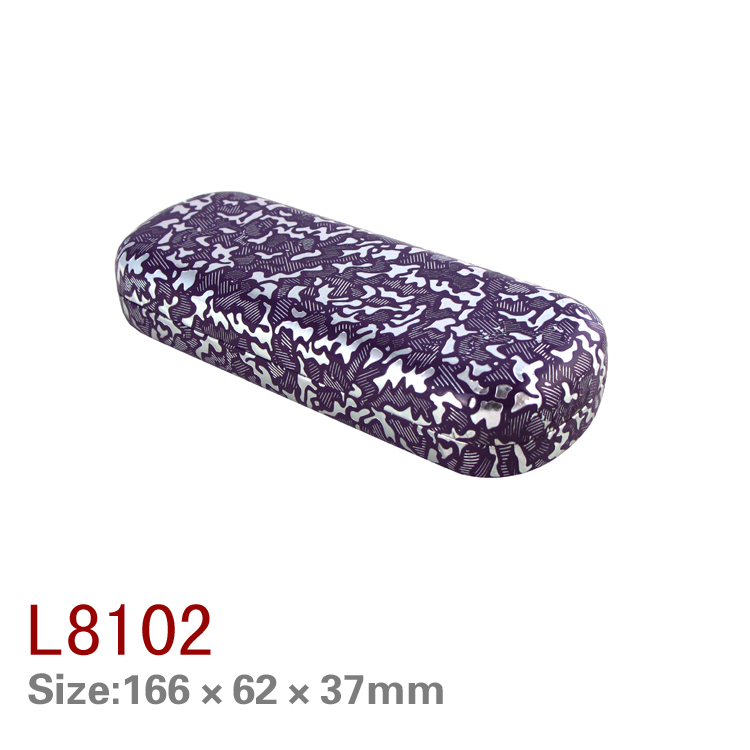
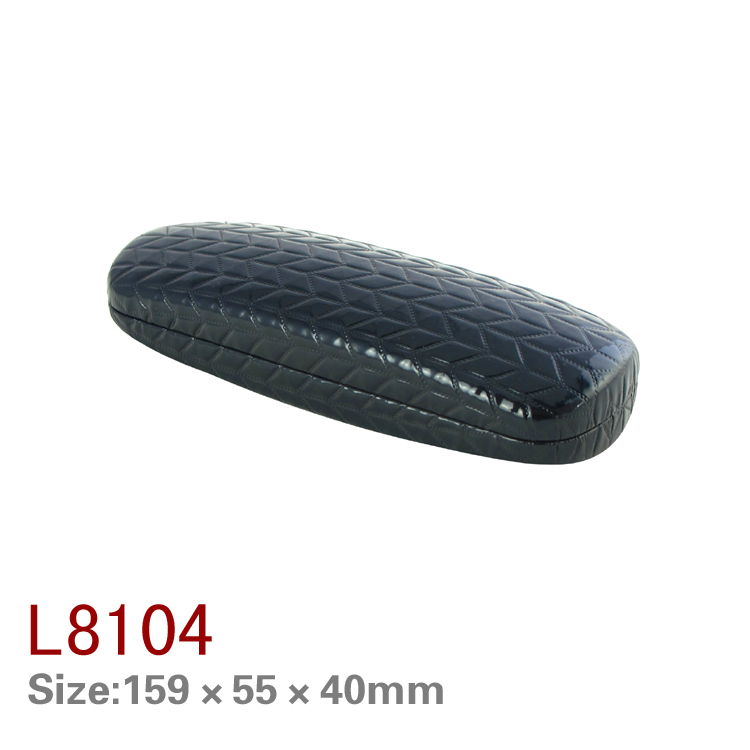
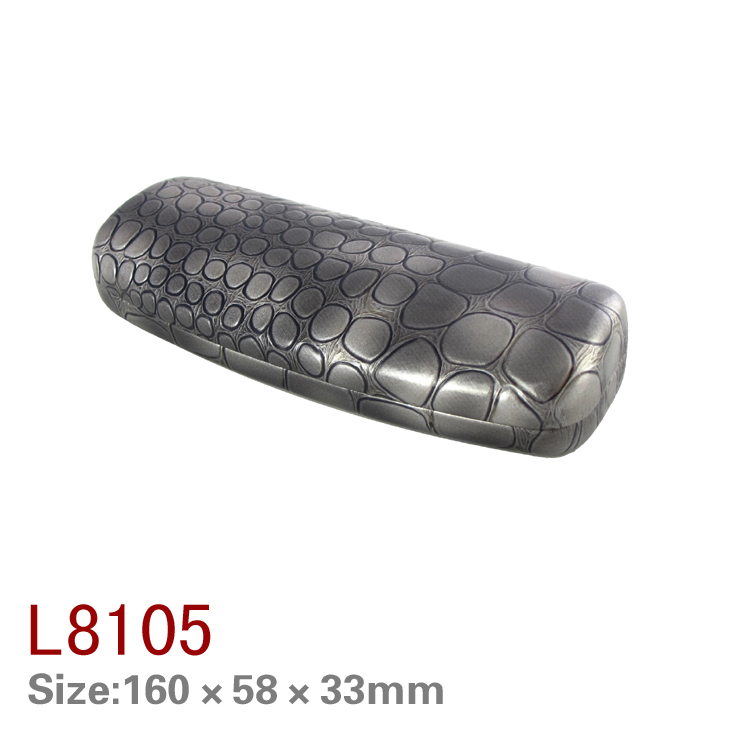
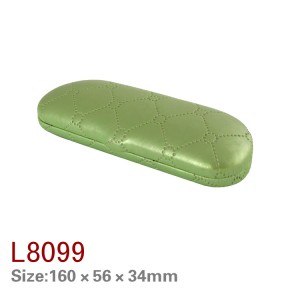
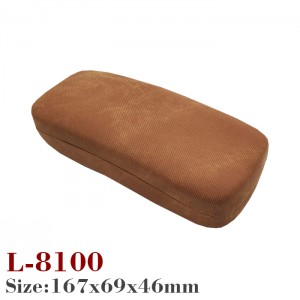
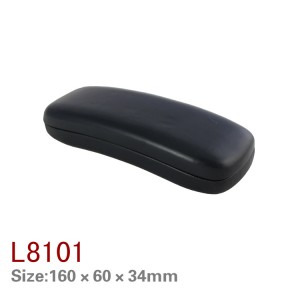
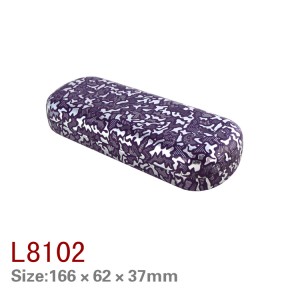
PU-Covered Metal Case (This Model)
Compressive Strength: Metal frame withstands compression
Lifespan: Remains distortion-free for several years
Opening/Closing Feel: Hinge opens and closes crisply, becoming smoother with use
Lining Fit: Flocked lining—soft and scratch-resistant
Surface Texture: PU leather covering—scratch-resistant and stain-resistant
Drop Protection: Metal shell provides cushioning and impact resistance
The “high cost” of a metal eyeglass case isn’t about production costs—it’s an investment. Every metal eyeglass case undergoes three core processes: stamping, cold pressing, and hot-pressing with velvet lining. We don’t just make eyeglass cases; these sturdy cases serve as a “second skeleton” for the glasses.
| Model Number | Dimensions (L × W × H) |
|---|---|
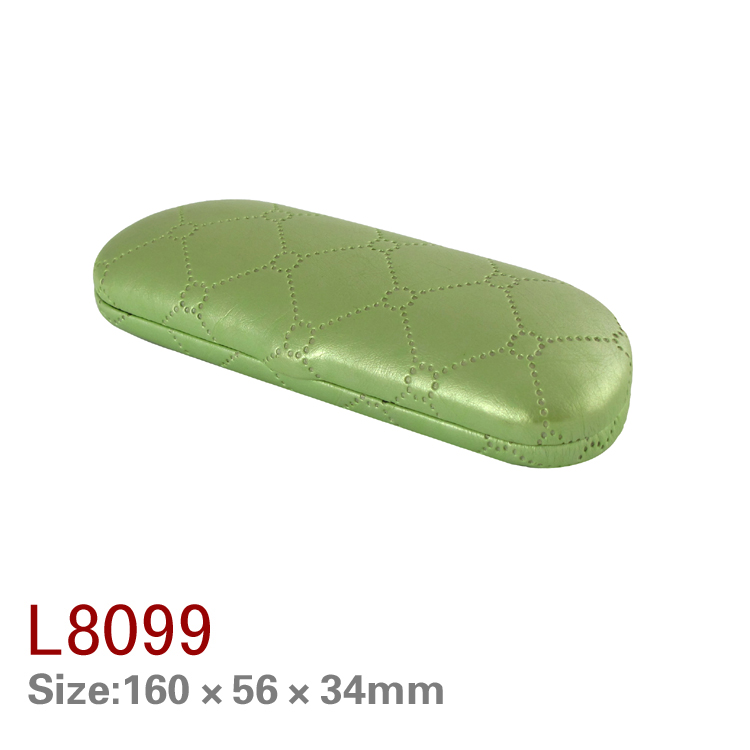
| L8099 | 160 × 56 × 34 mm |
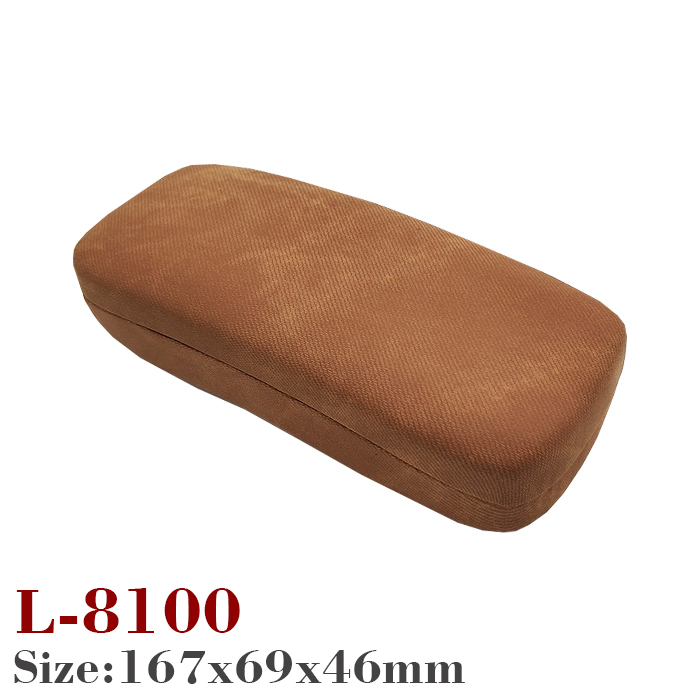
| L-8100 | 167 × 69 × 46 mm |
| L8101 | 160 × 60 × 34 mm |
| L8102 | 166 × 62 × 37 mm |
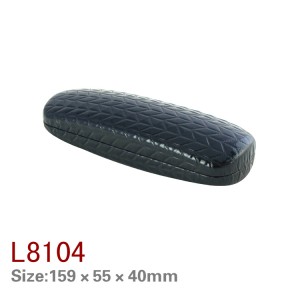
| L8104 | 159 × 55 × 40 mm |
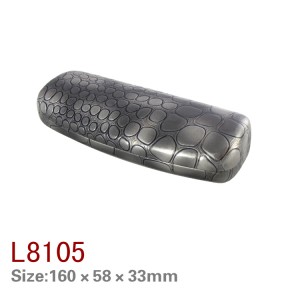
| L8105 | 160 × 58 × 33 mm |
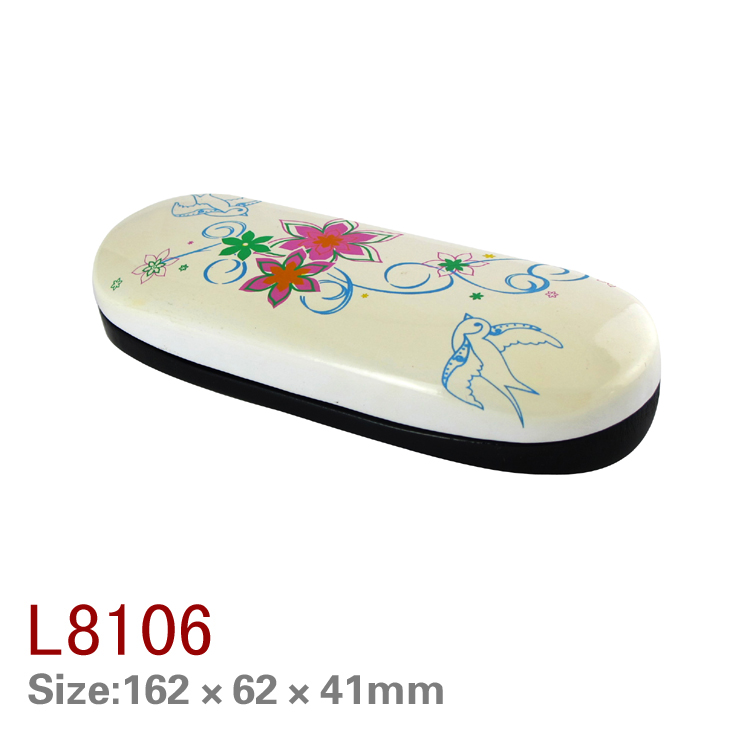
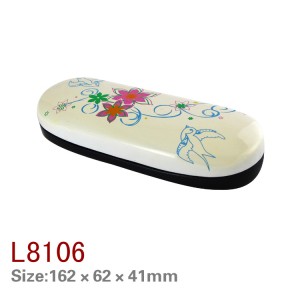
| L8106 | 162 × 62 × 41 mm |
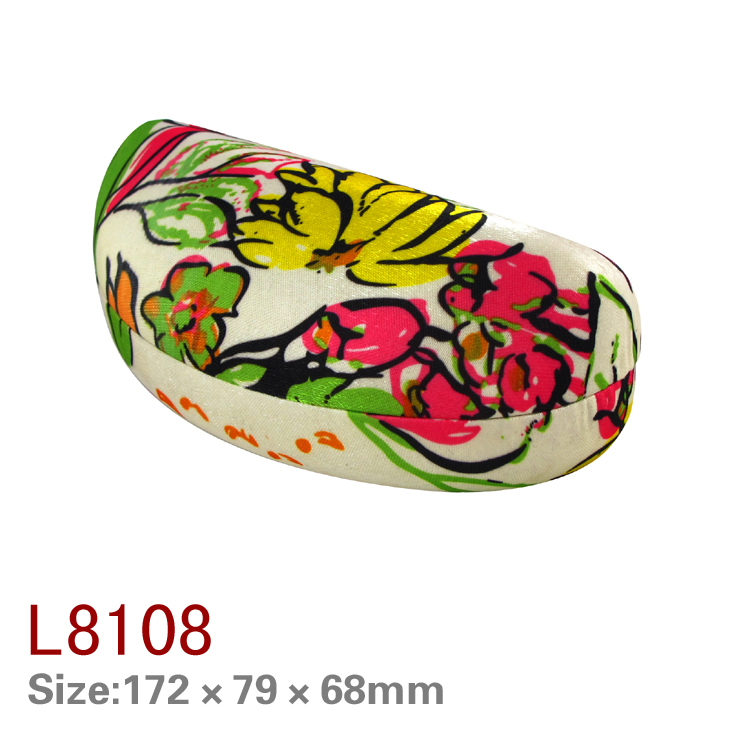
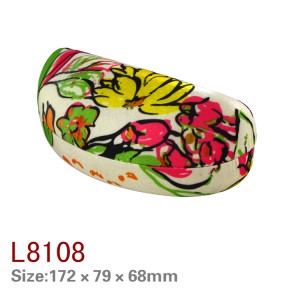
| L8108 | 172 × 79 × 68 mm |
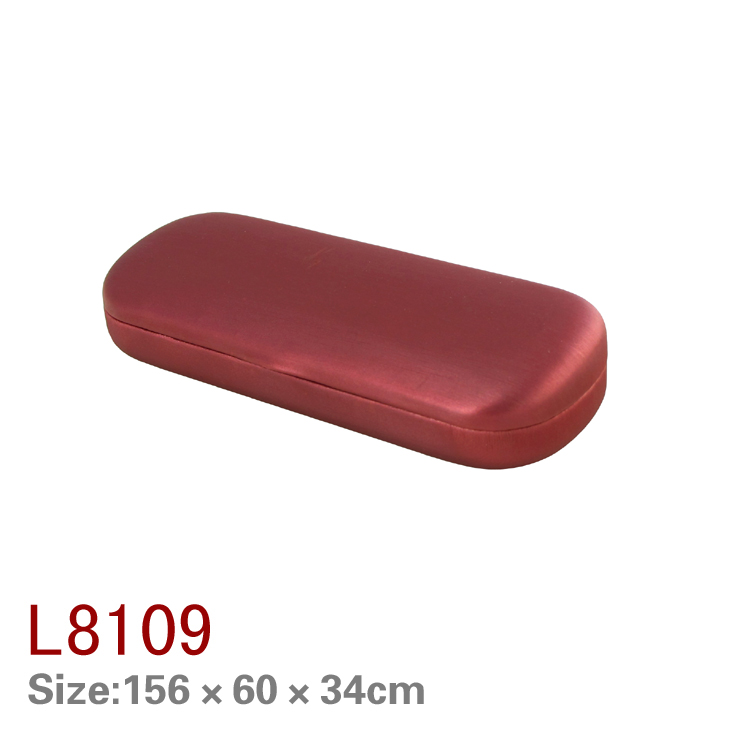
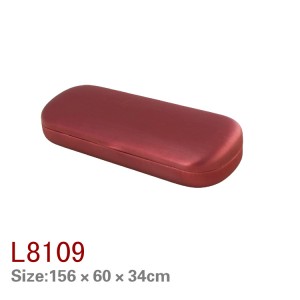
| L8109 | 156 × 60 × 34 mm |
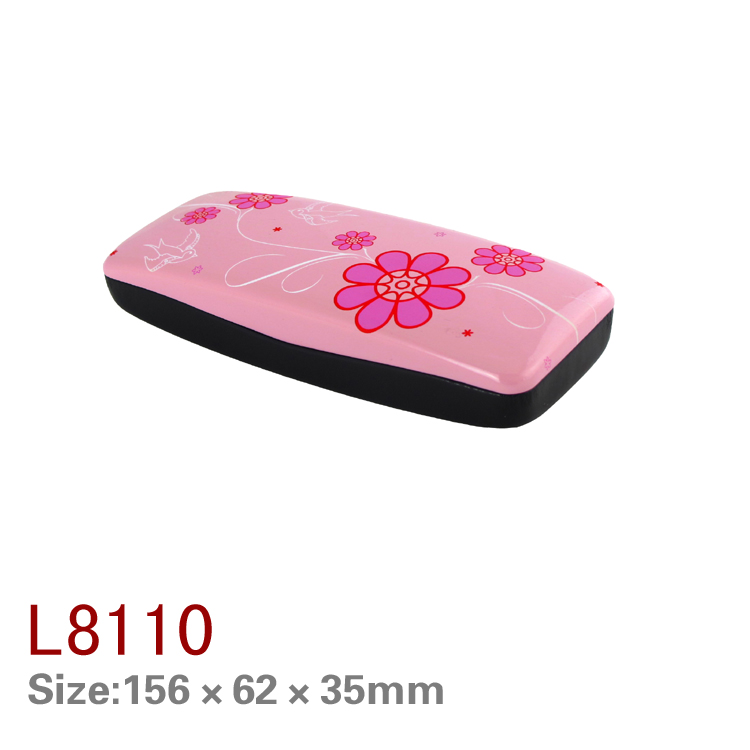
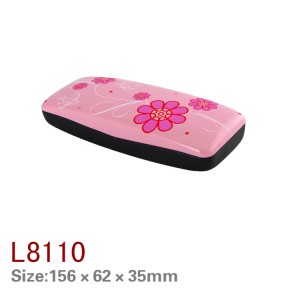
| L8110 | 156 × 62 × 35 mm |
How is a sheet metal eyeglass case made?
Many customers are curious about our manufacturing process, so here’s a brief breakdown:
First Layer: Stamping the Metal Sheet
We use a 60-metric-ton punch press to stamp a 0.4mm-thick galvanized steel sheet into the precise curved shapes of the case lid and base. The metal sheet undergoes anti-rust treatment and passes a 48-hour salt spray test without any rust spots. This forms the “skeleton” of the entire eyeglass case—without it, the case would be nothing more than a flimsy, limp shell.
Step 2: Cold-Press Laminating of PU Leather
We use a cold-press mold to tightly bond 0.5–0.8 mm stretchable PU leather (REACH-certified) to the steel sheet. The elasticity and thickness of the PU leather determine the firmness or softness of the texture—if it’s too thin, it lacks quality; if too thick, it becomes uneven and inflexible. We use 0.65 mm as our standard thickness, a “golden balance” selected through years of experience.
Step 3: Heat-Pressed Flocked Lining
The inner layer uses a flocking process, where short pile is heat-pressed onto the vacuum-formed sheet using specialized equipment. Further heat-pressing with high-temperature molds ensures the pile is fine and soft, preventing scratches on the lenses when inserted. Compared to ordinary foam linings, the flocked lining does not age or shed, offering a longer service life.
Step 4: Assembly and Magnet Installation
The three-layer structure is assembled and fitted with a strong spring hinge. The case opens and closes crisply and smoothly, with a deep, substantial sound—the moment you close it, you’ll hear the sound a high-quality case should make.
Why Is the “Feel” of Opening and Closing So Important?
You might think the “feel” of opening and closing is a minor detail. But for users who open and close their eyeglass cases several times a day, that feel is part of their impression of the brand.
A loose-fitting case → Users think, “This brand doesn’t pay attention to detail.”
A snug-fitting case → Users think, “This brand is high-quality.”
The opening and closing force of our metal eyeglass case has been fine-tuned through repeated testing—neither too loose nor too tight. It can be opened and closed with one hand, and when closed, it emits a deep, muffled “thud” that’s crisp and stable. This isn’t some mystical concept; it’s a matter of engineering detail. Many customers have told us, “I just love that sound.”
Who is using this metal eyewear case?
European optical brands: Used for packaging eyewear priced at 150 euros or more, printed with unique designs to enhance the unboxing experience
U.S. DTC brands: Require crush resistance, lightweight construction, and reduced return rates
Designer eyewear stores: Custom non-standard internal structures to match unique frames
Corporate gift customization: Hot-stamped logos; the metal eyewear case itself is reusable (for jewelry, stationery, etc.)
| Parameter | Standard Model | Customization Range |
|---|---|---|
| External Dimensions | Approx. 160 × 65 × 32 mm | Any dimensions (length, width, and height are all adjustable) |
| Outer PU Leather | 0.6 mm stretch PU | 0.5–0.8 mm, 300+ colors, Pantone color customization available |
| Metal Plate Thickness | 0.4 mm galvanized rust-proof | 0.3–0.5 mm (depending on compression resistance requirements) |
| Lining Material | Short-pile flocked velvet | Long-pile velvet / suede / microfiber |
| Closure | Heavy-duty hinge | Customizable |
| Logo Process | Hot stamping / embossing / screen printing | Customizable |
| MOQ | 1,000 pieces | Small batches negotiable |
| Prototype Lead Time | 10–15 days | — |
| Mass Production Lead Time | 25–35 days | — |
Customization Process
Submit Requirements – Dimensions, colors, logo design, lining preferences
Prototyping – 10–15 days to produce a physical sample for confirmation of texture, color, and fit
Confirmation – Mass production begins after your approval
Production – 25–35 days to complete the bulk order
Shipping – Air freight/sea freight; we offer drop shipping to overseas warehouses
Frequently Asked Questions (Metal Case FAQ)
Q1: Are the metal boxes too heavy?
▼
Q2: Will the metal insert in the eyewear case rust?
▼
Q3: Does the PU leather used on the surface of the eyewear case have an odor?
▼
Q4: Does the flocked lining inside the eyewear case shed?
▼
Q5: What is the minimum order quantity (MOQ) for metal eyeglass cases?
▼
Q6: Do I need to provide the actual eyeglasses for a metal eyeglass case prototype?
▼
Q7: What quality certifications can your factory provide?
▼
-
Premium Custom Metal Eyewear Case – Durable Iro...
-
Custom-made eco-friendly PU eyeglass cases from...
-
Custom Metal Eyeglasses Cases: OEM/ODM Manufact...
-
Hard Shell Iron Glasses Case Custom iron eyewea...
-
L8008/8009/8010/8013/8013-1/leather iron eyewea...
-
Factory customized iron eyewear case brand eyew...